
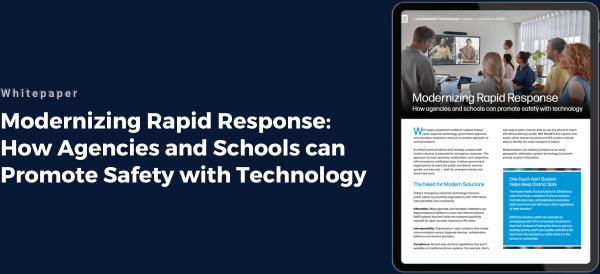
Outdated phone systems and fragmented communications tools can slow response times when seconds matter. As emergency notification requirements evolve and expectations for real time coordination rise, agencies and schools need a modern approach to communications that supports both emergency response and day to day operations.
This thought leadership paper explains how a unified communications strategy paired with modern devices can help organizations improve interoperability, strengthen collaboration, and meet critical compliance requirements.
In this paper, you will learn how to:
Improve 911 response accuracy with precise location data that supports Kari’s Law and RAY BAUM’S Act requirements
Enable communication across devices, collaboration platforms, and service providers
Use intelligent routing to handle high volumes of calls and data more efficiently
Integrate emergency alerts across systems to reach more people through multiple modalities
Build a deployment and maintenance plan that supports long term modernization
Train staff to use 911 and alert capabilities correctly when it matters most
Avoid vendor lock in while maintaining flexibility as needs evolve
These strategies show how modernizing rapid response safety technology enables real-time communication, better situational awareness, and faster emergency response.
Get the paper to see how agencies and schools can modernize rapid response and strengthen everyday communications with a unified strategy and modern technology.